
Table of Contents
As someone who’s been helping people build websites since high school, I’ve seen the landscape change dramatically. When I launched WPBeginner in 2009, shared hosting was the norm due to its affordability and ease of use. However, as the WordPress ecosystem grew, managed WordPress hosting became a game-changer for businesses needing enhanced performance and security.
With so many options available, choosing the right managed WordPress hosting service can be daunting. That’s why we’ve put together this comprehensive guide to the top managed WordPress hosting companies in the United States, evaluating their performance, features, and value proposition.
Our analysis is based on extensive testing, measuring critical metrics like Time To First Byte (TTFB), uptime reliability, and load handling capabilities. This guide will help you understand which managed WordPress hosting company best suits your specific needs, whether you’re running a small blog or a high-traffic business website.
Key Takeaways
- Understand the differences between managed WordPress hosting and regular hosting options.
- Discover the top managed WordPress hosting companies in the US.
- Learn how to choose the best hosting service for your WordPress site’s needs.
- Compare pricing plans and performance benchmarks.
- Identify unique features that can enhance your site’s performance.
Understanding Managed WordPress Hosting
If you’re considering the best hosting option for your WordPress site, it’s essential to understand what managed WordPress hosting entails. Managed WordPress hosting is a type of web hosting service that is specifically optimized for WordPress sites, offering a range of benefits that can enhance your website’s performance, security, and overall user experience.
Definition and Core Features
Managed WordPress hosting is designed to provide a tailored experience for WordPress users. The core features typically include WordPress-specific server optimizations, automatic updates for WordPress and its plugins, enhanced security measures, and expert support from WordPress specialists.
- Automatic WordPress updates and backups
- Enhanced security features, including malware scanning and protection
- WordPress-optimized servers for improved performance
- Expert support from WordPress specialists
These features work together to provide a hassle-free experience, allowing you to focus on creating content and growing your online presence.
Difference Between Managed and Regular Hosting
The primary difference between managed WordPress hosting and regular hosting lies in the level of service and optimization provided. Regular hosting offers basic server space and support, whereas managed WordPress hosting is tailored to meet the specific needs of WordPress sites.
Key differences include:
- Performance: Managed WordPress hosting delivers significantly better performance due to WordPress-specific server optimizations and caching technologies.
- Support: Managed hosting provides access to WordPress experts, offering a more specialized and effective support experience.
- Security and Maintenance: Managed hosting handles tasks such as WordPress updates, security, and backups automatically, reducing the burden on website owners.
While managed WordPress hosting comes at a premium price, the value lies in the time saved on maintenance, improved security, better performance, and specialized support.
Benefits of Using Managed WordPress Hosting
The benefits of managed WordPress hosting are multifaceted, ranging from improved performance to robust security measures. By opting for managed WordPress hosting, you can significantly enhance your website’s overall functionality and user experience.
Enhanced Performance and Speed
Managed WordPress hosting providers optimize their servers specifically for WordPress, resulting in faster load times and improved overall performance. This optimization includes server-level caching, content delivery networks (CDNs), and optimized database performance. For instance, a leading managed WordPress host might use a proprietary caching system that reduces load times by up to 50%. Faster websites lead to better user engagement and higher search engine rankings.
Improved Security Measures
Security is a top priority for managed WordPress hosting providers. They implement advanced security measures such as firewalls, malware scanning, and regular security updates to protect your site from potential threats. Many providers also offer SSL certificates and DDoS protection to further enhance security. With these measures in place, you can significantly reduce the risk of your website being compromised.
Automatic Updates and Backups
Managed WordPress hosts handle updates for the WordPress core, themes, and plugins, ensuring that your site remains secure and up-to-date. Additionally, they perform regular backups, so you can quickly restore your site in case of an issue. This feature is particularly valuable for businesses that cannot afford to have their website down for an extended period.
Expert WordPress Support
One of the standout features of managed WordPress hosting is the expert support provided. Support teams are knowledgeable about WordPress and can assist with a range of issues, from configuration problems to plugin conflicts. As noted by a satisfied customer, “One thing that sets SiteGround apart is its customer service. Whenever my team needs help, their 24/7 support team is quick to respond and incredibly knowledgeable.” This level of support can be invaluable for business owners who need quick resolution to website issues.
| Feature | Managed WordPress Hosting | Regular Hosting |
|---|---|---|
| Performance Optimization | Advanced server-level caching and CDNs | Limited optimization |
| Security Measures | Firewalls, malware scanning, and regular updates | Basic security features |
| Support | Expert WordPress support 24/7 | Limited WordPress expertise |
Our Testing Methodology
To provide you with the most accurate reviews, we’ve developed a rigorous testing methodology for evaluating managed WordPress hosting services. As of 2025, we have collected 5 years of historical performance data from various hosting providers, making us a reliable data source for choosing your next WordPress hosting provider.
Performance Metrics: TTFB, Uptime, and Load Handling
Our testing focuses on key performance metrics that directly impact your site’s user experience. These include Time to First Byte (TTFB), uptime, and load handling capabilities. TTFB is crucial as it measures the time taken for a user’s browser to receive the first byte of data from the server. Uptime is another vital metric, indicating the percentage of time your site is available to users. Load handling tests simulate high traffic conditions to assess how well a hosting provider manages increased loads.
We monitor these metrics closely because they directly affect your site’s performance and, consequently, your visitors’ experience. By evaluating these performance metrics, you can better understand the strengths and weaknesses of each hosting provider.
Real-World Performance Testing Process
Our real-world testing process involves several steps to ensure fair and accurate comparisons across different hosting platforms. We start by creating identical WordPress sites on each hosting provider. This is followed by installing a standard set of popular plugins and themes to simulate typical WordPress site configurations.
- Performance tests are conducted from multiple geographic locations to account for regional variations in server response times and content delivery.
- We collect performance data over extended periods, typically months, to identify consistent patterns and account for fluctuations in hosting performance.
- Traffic simulation tests use automated tools to mimic realistic user behaviors, including page browsing, form submissions, and eCommerce transactions, to thoroughly assess each platform’s capabilities.
By adopting this comprehensive testing methodology, we ensure that our reviews are based on real-world data, providing you with a clear understanding of what to expect from each managed WordPress hosting service.
Top 10 Managed WordPress Hosting Companies in the US
The best managed WordPress hosting companies in the US differentiate themselves through performance, security, and support. When choosing a hosting provider, it’s essential to consider factors such as pricing, features, and customer reviews.
Comparison Table: Features, Pricing, and Performance
| Hosting Provider | Pricing | Performance (TTFB) | Key Features |
|---|---|---|---|
| DreamHost | $16.95/mo | 439 ms | Automatic updates, free SSL |
| Hosting.com | $11.99/mo | 438 ms | Developer-friendly tools, scalable |
| Pressable | $25/mo | 520 ms | Managed WordPress hosting for agencies |
| Kinsta | $30/mo | 635 ms | Premium features, APM tools |
| WP Engine | $12.71/mo | 1.04 s | Enterprise-grade infrastructure |
Key Differentiators at a Glance
Each managed WordPress hosting provider offers unique selling points. For instance, SiteGround stands out for its balance of performance and affordability, making it an excellent all-purpose option. Rapyd Cloud differentiates itself with exceptional handling of logged-in user traffic, ideal for membership sites. Rocket.net‘s edge network architecture provides superior global performance, while Kinsta offers premium features like APM tools on all plans.
When selecting a managed WordPress hosting provider, consider your specific needs, such as security features, backup options, and support quality. By evaluating these factors, you can choose a hosting provider that meets your requirements and enhances your WordPress experience.
SiteGround: Best All-Purpose WordPress Hosting
SiteGround is a top contender in the managed WordPress hosting market, offering a versatile solution for various types of websites. With its robust infrastructure and user-centric approach, SiteGround has established itself as a leading provider of managed WordPress hosting.
Overview and Performance Metrics
SiteGround’s managed WordPress hosting is designed to deliver high performance and reliability. With a strong focus on speed, SiteGround achieves impressive performance metrics, including fast load times and high uptime. The hosting provider utilizes advanced technologies like SSD storage and HTTP/2 to enhance website performance.
Key performance metrics include: Fast load times, high uptime, and efficient resource allocation.
Key Features and Security
SiteGround offers a range of features that enhance the WordPress hosting experience, including automatic updates, daily backups, and advanced security measures. The hosting provider also includes a free SSL certificate and proactive security monitoring to protect against malware and other threats.
Notable features: Automatic updates, daily backups, free SSL certificate, and proactive security monitoring.
Pros and Cons
SiteGround’s managed WordPress hosting has several advantages, including excellent performance, robust security, and user-friendly management tools. However, some users may find the pricing slightly higher than that of other hosting providers, and the resource limits on lower-tier plans may not be suitable for very high-traffic sites.
Pros: Excellent performance, robust security, user-friendly management tools.
Cons: Pricing may be higher than some competitors, resource limits on lower-tier plans.
Pricing and Who It’s Best For
SiteGround offers three primary managed WordPress hosting plans: StartUp ($2.99/month), GrowBig ($4.99/month), and GoGeek ($7.99/month). The plans are designed to accommodate different needs, from small blogs to business websites with high traffic. SiteGround is best suited for small to medium-sized business websites, bloggers, and online stores that require reliable performance without the premium price tag of enterprise-level hosting.
Recommended for: Small to medium-sized businesses, bloggers, online stores.
Rapyd Cloud: Premium Hosting for eCommerce and Membership Sites

With a focus on performance and security, Rapyd Cloud is an ideal choice for WooCommerce stores and membership sites. You can rely on their managed WordPress hosting services to deliver a fast and secure online experience.
Overview and Performance Metrics
Rapyd Cloud’s managed WordPress hosting is designed to provide top-notch performance for your eCommerce or membership site. With a starting price of $29/mo, you get access to a robust hosting solution that includes 10GB of disk space for a single site.
Their infrastructure is optimized for high traffic and resource-intensive applications, ensuring your site remains responsive under load.
Key Features and Security
Rapyd Cloud includes a suite of premium features in all their plans, such as Object Cache Pro and a global CDN, to enhance your site’s performance. Advanced security measures are also in place to protect your WordPress site from potential threats.
You’ll benefit from automatic updates and backups, ensuring your site is always up-to-date and secure.
Pros and Cons
The pros of using Rapyd Cloud include their high-performance infrastructure, comprehensive security features, and excellent support for WooCommerce and membership sites. However, the pricing might be on the higher side for smaller businesses or personal blogs.
It’s essential to weigh these factors based on your specific needs.
Pricing and Who It’s Best For
Rapyd Cloud’s pricing starts at $29/month for a single site, with options to scale up to $59/month and $99/month for more demanding applications. You can get two months free on annual plans, making it a more cost-effective option for long-term commitments.
This hosting solution is best suited for busy WooCommerce stores, online marketplaces, membership sites, and eLearning platforms that require high scalability and uptime.
Rocket.net: Optimized for High-Traffic Websites

Rocket.net stands out as a premium managed WordPress hosting provider tailored for high-traffic websites. With a focus on performance, security, and reliability, Rocket.net is designed to handle the demands of busy online businesses and content-rich blogs.
Overview and Performance Metrics
Rocket.net’s infrastructure is built for speed and scalability, utilizing a global edge network and optimized server configurations. Their performance metrics showcase impressive results, with fast load times and high uptime records.
Key performance highlights include: Fast load times, high uptime records, and scalable infrastructure.
Key Features and Security
Rocket.net offers a comprehensive suite of features, including Cloudflare Enterprise integration, daily backups, and staging environments. Their security measures are robust, ensuring your website is protected against various threats.
Their plans are designed to grow with your business, offering flexible scalability and reliable support.
Pros and Cons
The main advantages of using Rocket.net include its high-performance capabilities, robust security features, and excellent support. However, some users may find the pricing to be on the higher side compared to other hosting options.
Pros: High-performance hosting, robust security, excellent support.
Cons: Pricing may be higher than some competitors.
Pricing and Who It’s Best For
Rocket.net’s pricing starts at $25/month for a single site with 10GB of storage, supporting approximately 250,000 monthly visitors. Their Pro plan at $50/month supports 2 websites with 20GB storage, while the Business plan at $100/month includes 5 sites and 40GB storage.
This hosting solution is best for high-traffic business websites, content-heavy blogs, and online stores that require reliable performance and global reach.
WordPress.com: Seamless Solution for Business and eCommerce

WordPress.com offers a seamless solution for businesses and online stores looking for hassle-free WordPress hosting. With its robust features and user-friendly interface, it’s an ideal choice for those who want to manage their WordPress site without worrying about the technical aspects.
Overview and Performance Metrics
WordPress.com’s managed WordPress hosting plans are designed to provide top-notch performance and reliability. The platform’s infrastructure is optimized for WordPress, ensuring fast load times and high uptime. With a range of plans to choose from, you can select the one that best suits your business needs.
Key performance metrics include: fast load times, high uptime, and scalable resources to handle traffic spikes.
Key Features and Security
WordPress.com’s hosting plans come with a range of features that enhance your site’s performance and security. These include:
- Automated backups and updates
- Priority support
- Free domain registration with paid plans
- 50GB storage (upgradable)
- Plugin installation capabilities
Security features include automated backups, malware scanning, and robust firewalls to protect your site from threats.
Pros and Cons
WordPress.com’s managed WordPress hosting has several advantages, including ease of use, high performance, and robust security features. However, some users may find the pricing plans to be on the higher side, and the limitations on storage and sites allowed may not be suitable for large-scale businesses.
Pros: easy to use, high performance, robust security.
Cons: pricing plans may be expensive for some users, limitations on storage and sites allowed.
Pricing and Who It’s Best For
WordPress.com offers several pricing tiers, with the Business plan starting at $12.50/month (with coupon) and the Commerce plan at $22.50/month. The platform is best suited for small to medium businesses that want a hassle-free WordPress experience without technical management responsibilities.
Ideal users: small to medium businesses, online stores, content creators, and organizations that prioritize ease of use and reliability.
Hostinger: Budget-Friendly Option with Premium Performance
If you’re looking for a cost-effective way to host your WordPress site without sacrificing speed and security, Hostinger is worth considering. With plans starting at just $2.69 per month, Hostinger offers one of the most affordable managed WordPress hosting options available.
Overview and Performance Metrics
Hostinger’s managed WordPress hosting is designed to provide fast and secure hosting for WordPress sites. With a focus on performance, Hostinger achieves impressive load times and uptime, ensuring your site is always available to visitors. Key performance metrics include a high server response time and reliable uptime, making it suitable for businesses and individuals alike.
Key Features and Security
Hostinger’s plans come with a range of features, including free SSL certificates, daily backups on higher-tier plans, and enhanced security measures to protect your site from malware and other threats. Their hosting plans also include a free domain for the first year, adding value to their already competitive pricing.
Pros and Cons
The main advantages of Hostinger include its affordable pricing, robust performance, and comprehensive feature set. However, some users might find the lack of advanced features in the lower-tier plans to be a limitation. Nonetheless, Hostinger’s balance of cost and performance makes it an attractive option for many users.
Pricing and Who It’s Best For
Hostinger offers several pricing plans to suit different needs. The Single plan starts at $2.69/month for one site with 50GB storage, the Premium plan at $3.99/month supports up to 100 sites with 100GB storage, and the Business plan at $5.99/month adds more resources and features for higher-traffic sites. Hostinger is best for budget-conscious WordPress users, beginners, and small businesses looking to minimize hosting costs without compromising on performance.
DreamHost: Reliable Hosting for Small Businesses and Bloggers
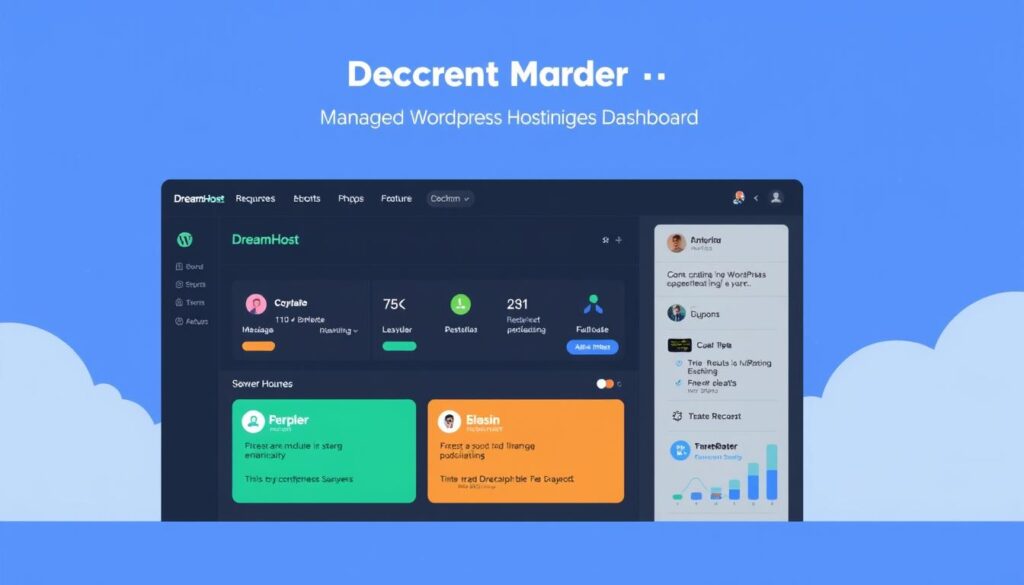
DreamHost is a reliable choice for managed WordPress hosting, offering a range of plans tailored to different needs. Their managed WordPress hosting, known as DreamPress, is designed to provide a hassle-free experience, allowing users to focus on creating content rather than managing technical details.
Overview and Performance Metrics
DreamHost’s DreamPress starts at $16.95/month for a single site with 30GB of SSD storage, supporting approximately 100,000 monthly visitors. The performance metrics indicate a strong capability to handle traffic efficiently. With automated daily backups and a staging environment, users can test changes without affecting their live site.
Key Features and Security
All DreamPress plans include a free domain with privacy protection, unlimited email accounts, and Jetpack Professional on higher plans. DreamHost prioritizes security with features like SSL certificates and automated malware removal, ensuring a secure environment for your website.
Pros and Cons
The pros of DreamHost’s managed WordPress hosting include its robust performance, comprehensive features, and excellent customer support. However, some users might find the pricing slightly higher than that of other providers, and the entry-level plan is limited to a single site.
Pricing and Who It’s Best For
DreamHost’s managed WordPress hosting plans are priced competitively, starting at $16.95/month for DreamPress, $24.95/month for DreamPress Plus, and $71.95/month for DreamPress Pro. It’s an ideal choice for small businesses, bloggers, and personal websites seeking reliable performance and a feature-rich hosting environment.
How to Choose the Right Managed WordPress Hosting

The process of picking the perfect managed WordPress hosting involves evaluating several key factors that directly impact your website’s performance, security, and scalability.
Assessing Your Website Requirements
Before diving into the various managed WordPress hosting options, it’s crucial to assess your website’s specific needs. Consider the number of websites you plan to host, expected traffic volume, and required storage space. For instance, the ‘GrowBig’ plan offers multiple websites, 20GB of web space, and is suitable for 25,000 visits, making it a viable option for growing businesses.
Budget Considerations and Value Analysis
Your budget plays a significant role in choosing the right managed WordPress hosting. Evaluate the cost of different plans and the value they offer. Consider not just the initial cost but also the renewal rates and the features included. Look for hosts that offer flexible pricing plans that can adapt to your growing needs.
Support Quality and Availability
The quality and availability of support can significantly impact your experience with managed WordPress hosting. Opt for providers that offer 24/7 support through multiple channels, such as live chat, email, and phone. Ensure that the support team is knowledgeable about WordPress and can address your queries efficiently.
Scalability for Future Growth
As your website grows, your hosting needs will evolve. It’s essential to choose a managed WordPress hosting provider that offers scalability. Evaluate each hosting provider’s upgrade path to ensure smooth transitions as your website grows. Consider hosts that offer automatic scaling capabilities and clear pricing for multi-site management.
When assessing managed WordPress hosting providers, consider the following key factors:
- Evaluate each hosting provider’s upgrade path to ensure smooth transitions as your website grows, avoiding platforms with significant gaps between plan tiers.
- Consider hosts that offer automatic scaling capabilities that can handle sudden traffic spikes without manual intervention or emergency upgrades.
- Look for providers that make it easy to add additional websites to your account as your business expands, with clear pricing for multi-site management.
- Assess resource allocation models, preferring hosts that offer specific visitor or traffic allowances rather than vague “suitable for small/medium sites” descriptions.
- Consider the long-term technical ecosystem, choosing hosts whose advanced features align with your anticipated future needs such as developer tools, staging environments, or specialized eCommerce capabilities.
Essential Features to Look for in WordPress Hosting

A well-chosen managed WordPress hosting service provides the foundation for a fast, secure, and highly performant website, making it essential to know what features to look for. When evaluating hosting options, several critical components can significantly impact your site’s overall performance and user experience.
Performance Optimization and Caching
One of the key features to look for in a WordPress hosting service is performance optimization, including effective caching mechanisms. Caching helps reduce the load on your server by storing frequently accessed resources, thereby improving your site’s load times and responsiveness. Look for hosts that offer advanced caching solutions, such as object caching, content delivery networks (CDNs), and optimized server configurations.
Security Features and Malware Protection
Security is paramount for any website. Your hosting service should offer robust security features, including malware protection, firewalls, and intrusion detection. Some hosts also provide free SSL certificates, which are essential for securing data transmitted between your site and its visitors. Ensure that your host has a comprehensive security strategy in place to protect your site from various threats.
Backup and Recovery Systems
Regular backups are crucial for ensuring that your site can be quickly restored in case of data loss or other disasters. Look for hosts that offer automatic backup systems, preferably with options for manual backups as well. The ability to easily restore your site from a backup is also vital, so consider hosts that provide user-friendly recovery processes.
Developer Tools and Staging Environments
For developers, having the right tools can make a significant difference. Staging environments allow you to test changes before implementing them on your live site, reducing the risk of errors affecting your users. Other valuable developer tools include Git integration for version control, SSH access for command-line management, and WP-CLI support for efficient WordPress management. Prioritize hosts that offer these features to streamline your development workflow.
When evaluating managed WordPress hosting services, consider the following key features:
- Prioritize hosts that offer staging environments, allowing you to create a copy of your live site for testing changes before implementing them on your production site.
- Look for Git integration that enables version control for your WordPress development, making it easier to track changes and collaborate with team members.
- Consider whether the host provides SSH access and WP-CLI support for advanced users who prefer command-line management of WordPress sites.
- Evaluate database access options, preferring hosts that provide phpMyAdmin or similar tools for direct database management when needed.
- Look for hosts that support development workflows with features like easy cloning between staging and production environments and selective push capabilities.
Conclusion
With over 16 years of experience, our team has curated a list of the best managed WordPress hosting services. Choosing the right managed WordPress hosting provider is a critical decision that can significantly impact your website’s performance, security, and overall success.
For most websites, SiteGround stands out as the best all-purpose WordPress hosting option, delivering an excellent balance of performance, features, and value. However, for specialized needs, consider Rapyd Cloud for membership sites and eCommerce, Rocket.net for high-traffic websites, or Hostinger for budget-conscious users seeking solid performance.
Remember, the “best” hosting provider depends on your specific requirements. Consider your traffic volume, technical needs, budget constraints, and growth plans when making your choice. Investing in quality managed WordPress hosting typically delivers a strong return through time savings, improved performance, enhanced security, and expert support that helps your site succeed.
Regardless of which provider you choose, managed WordPress hosting offers significant advantages over traditional hosting options for WordPress sites, with specialized optimizations that enhance the platform’s capabilities. By selecting the right hosting companies, you’re ensuring your website meets your needs and has the flexibility to adapt to future options and growth.